
Arrest History in Charlotte County
An arrest in Charlotte County can begin with the Charlotte County Sheriff's Office, a Virginia State Police trooper, the verified Drakes Branch police agency, or another state officer with arrest power. All people arrested in the county are brought to the Charlotte County Jail for processing. The investigating agency still owns its incident or arrest narrative. That means a trooper's report remains with VSP even when sheriff staff create the booking record at Law Lane.
Intake creates a different layer. Jail staff establish identity and holding charges, take fingerprints and a photograph, screen medical and classification needs, assign a jail unit, and record bond or release action. Reportable fingerprints and arrest data then move to the Virginia State Police Central Criminal Records Exchange. A magistrate may make the first bail decision, while a clerk creates the judicial trail only if a charge reaches court. These records may show different dates, labels, and outcomes because each serves a distinct job.
Charlotte Arrests Reach Law Lane
The county jail and sheriff records contact are at 222 Law Lane, Charlotte Court House, VA 23923. Call (434) 542-5141 for current custody or sheriff-created booking material. The county reports an average jail population near 65, but that count is not an arrest total. Its February 2025 inmate handout describes a tobacco-free facility where unit assignments use a score based on age, sex, conduct, medical issues, and other factors.
Charlotte County Sheriff Records
222 Law Lane
Charlotte Court House, VA 23923
(434) 542-5141
Ask ahead for current records-counter availability.
The sheriff's official inmate handout also documents a lobby kiosk for commissary and bond payments. It accepts cash and payment cards. Bond eligibility and amount come from the judicial order, not the kiosk. No current official source verified the jail's mail format, visit schedule, phone or video vendor, or a web deposit vendor, so callers should confirm each point before sending funds or traveling.
How to Look Up Charlotte County Arrests
A useful Charlotte County arrest lookup begins with the office that made or recorded the event. Have the adult's name, date and place of the incident, arresting agency, and report or case number when known. Ask for a precise item, such as a booking sheet, incident narrative, CAD log, or bounded body-camera segment. A broad request for everything can add search time, review cost, and redaction work.
- Call the Charlotte County Jail at (434) 542-5141 for recent local custody because no official online roster exists.
- Ask Sheriff Records for a historical booking sheet or sheriff arrest report. Contact VSP, Drakes Branch, DWR, or ABC separately when that agency investigated.
- Search both Charlotte General District and Circuit Court through the Virginia Judiciary case systems, then call the proper clerk for the filed charge and disposition.
- Use the VSP SP-167 process for a consent-based Virginia repository history. It requires a generated form, signatures, notarization, payment, and mailing.
- Submit a focused VFOIA request to the record holder when phone and court checks do not supply the releasable document. County administration is a fallback for county records questions.
General District Court handles misdemeanors and early felony steps. Circuit Court holds felony trial records and district appeals. The clerks share a courthouse address but use different phone numbers and post-office boxes. The broader Charlotte County criminal court case file is the best place to confirm whether a booking led to prosecution and how the case ended.
Charlotte Arrest Reports Follow Agencies
Booking at Law Lane does not move every source report into sheriff custody. The Charlotte County sheriff department page identifies the county office, which keeps its own incident and arrest files. A state-trooper matter stays with VSP. Drakes Branch town-created records begin through its shared town contact, while Keysville and Phenix have no verified current police departments. Virginia conservation officers and ABC special agents answer through their own state record channels.
This split matters when a court record gives only a short charge label. The agency narrative may describe the reported event and officer action, subject to exemptions for an active investigation, victims, minors, safety, and private details. The booking record shows intake and custody. Neither record decides guilt. When requesting material, name the exact record class and ask for an advance cost estimate if redaction or video review may be extensive.
Note: A Charlotte Jail booking and a trooper report can describe the same arrest while remaining in two separate official offices.
What an Arrest Record Shows
No public Charlotte County sample roster was available for inspection, so the defensible field list comes from the county booking process and state public-record rules. A release can depend on the exact record requested and lawful redactions. Adult arrestee identity, charge, and status are generally releasable basic information, while investigative facts and protected personal information may be withheld.
| Booking identifier | The jail's intake number or other control value when maintained and releasable. |
|---|---|
| Booking date and time | When Charlotte Jail received and processed the person. |
| Arresting agency | The sheriff, VSP, town officer, or other authority responsible for the arrest. |
| Holding charges | The allegations carried into intake, which may later change in court. |
| Bond | The recorded bond or release terms set through judicial process. |
| Booking photograph | An intake image that may be requested, subject to lawful withholding and redaction rules. |
| Release or transfer | Custody status, release action, or movement to another correctional system when recorded. |
A report number, booking identifier, or court case number can sharply reduce mistaken matches. A name alone is weak proof, especially when spellings vary. Compare the agency, dates, charge, and court before linking a record to a person.
After Charlotte Arrests Reach VADOC
A person sentenced to state custody or placed under state supervision may appear in the VADOC Inmate and Supervisee Locator. It accepts the first three letters of the first name plus the full last name, or a DOC ID, and its disclaimer warns that daily-updated data can still be inaccurate or out of date. The screen shows how Charlotte County arrest research changes once a person leaves local custody.
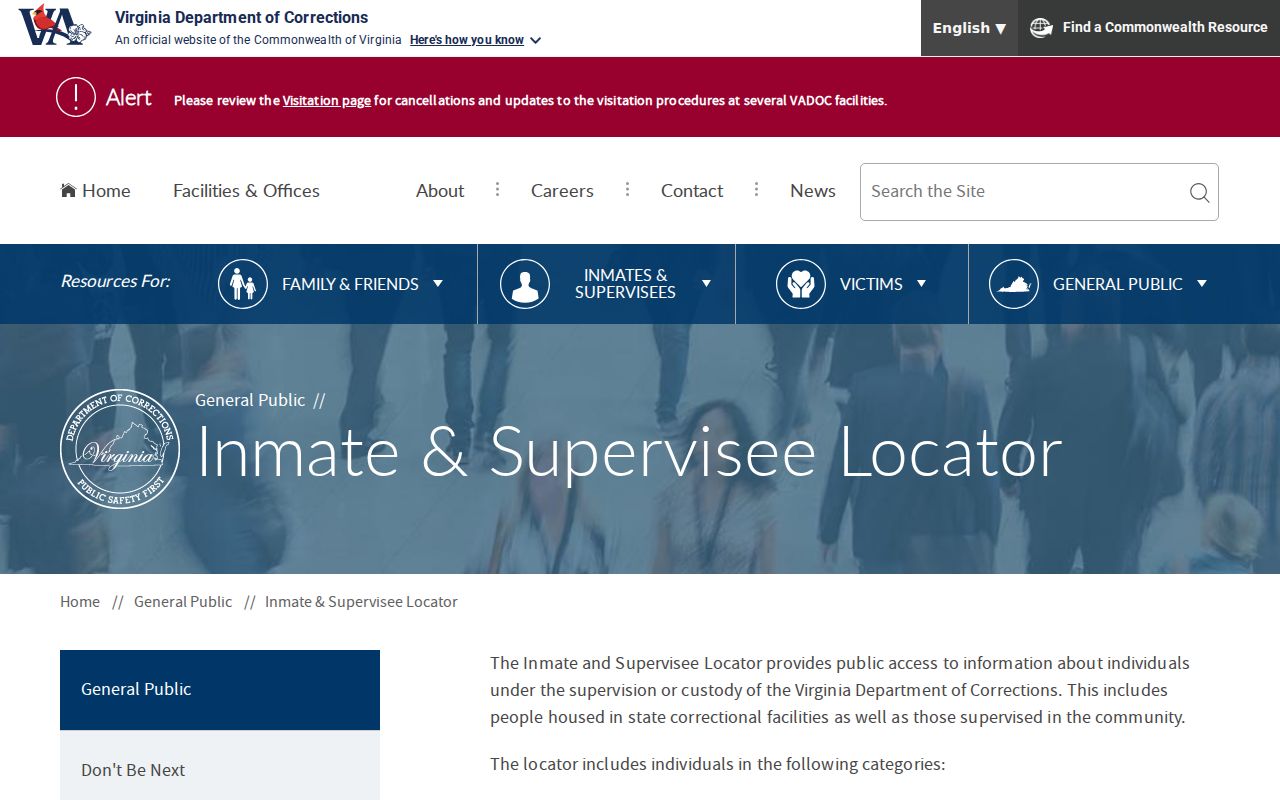
The image reinforces the key scope limit: VADOC covers state custody or supervision, not a complete Charlotte arrest history and not the local jail roster.
The VADOC public services gateway also routes users to FOIA and correctional resources.
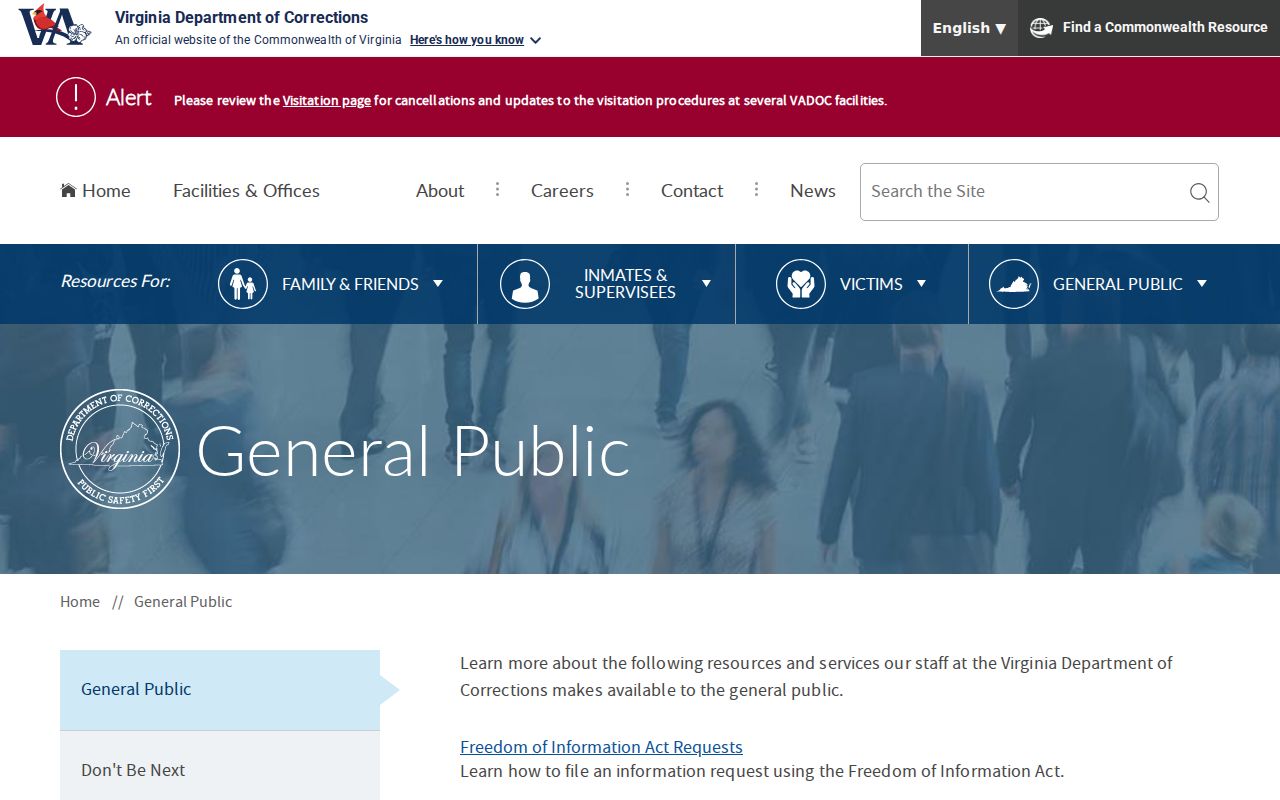
Use the Circuit Court sentencing record to confirm what the judge ordered. Locator status does not replace the court's final order or disclose restricted supervision case notes.
Recent Arrests and Booking Logs
Charlotte County has no verified official online jail roster, daily booking log, recent-arrest blotter, active-warrant portal, or most-wanted database. Current custody therefore starts with a call to the jail. Historical intake material goes through Sheriff Records. Absence from VADOC or a court search does not prove that no local arrest happened, since a person may remain in county custody, be released, have no filed charge yet, or appear under a different spelling.
For custody changes and notifications, the state-participating VINELink gateway can supplement direct confirmation.
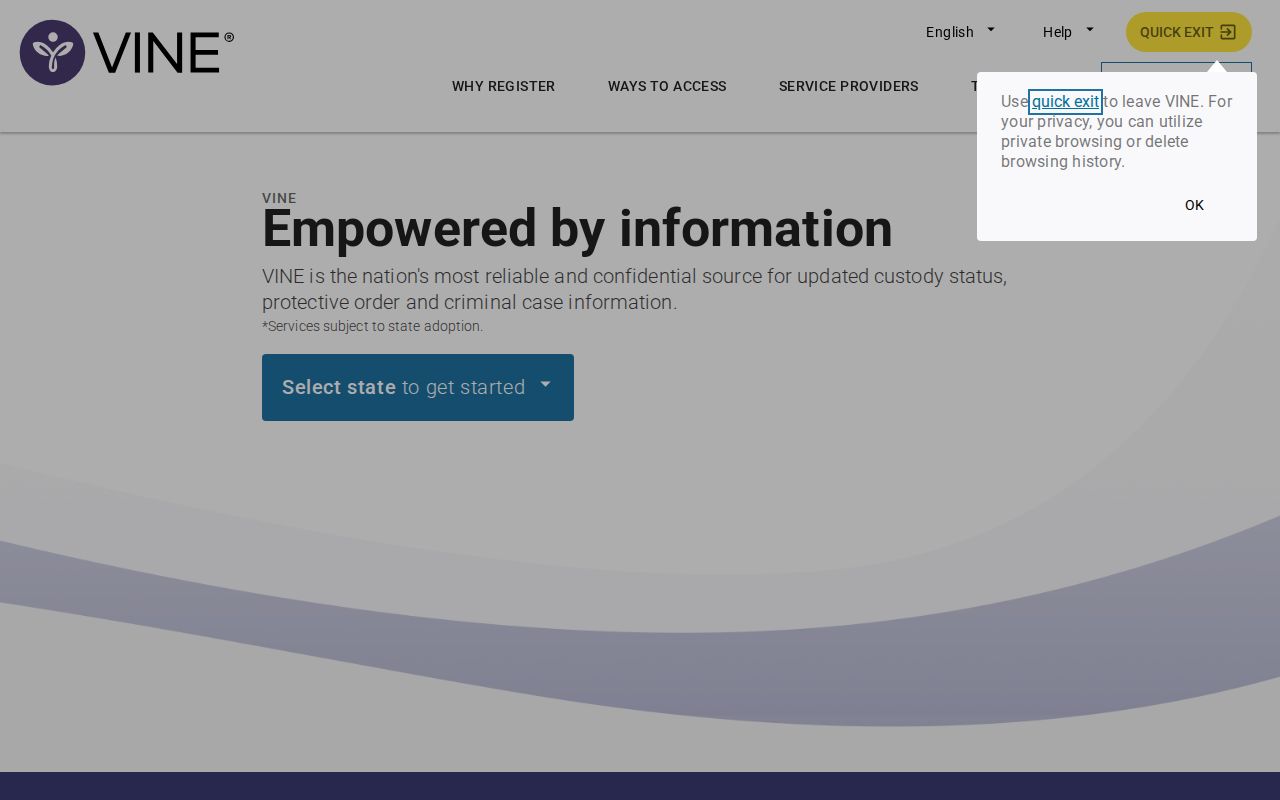
Notification tools are useful for updates, but Charlotte Jail and VADOC remain the official sources for their own custody scopes. Transfer, release, data lag, and system coverage can all explain why one screen changes.
Federal Charlotte Arrest Record Layer
Federal records are a separate layer. Charlotte County is served by the U.S. District Court for the Western District of Virginia, but a federal arrest or sentence does not become a county jail record because the person has a local connection. PACER holds federal dockets, while the official BOP Inmate Locator permits a name or federal register-number custody search. Neither system replaces the sheriff, Charlotte courts, VSP, or VADOC.
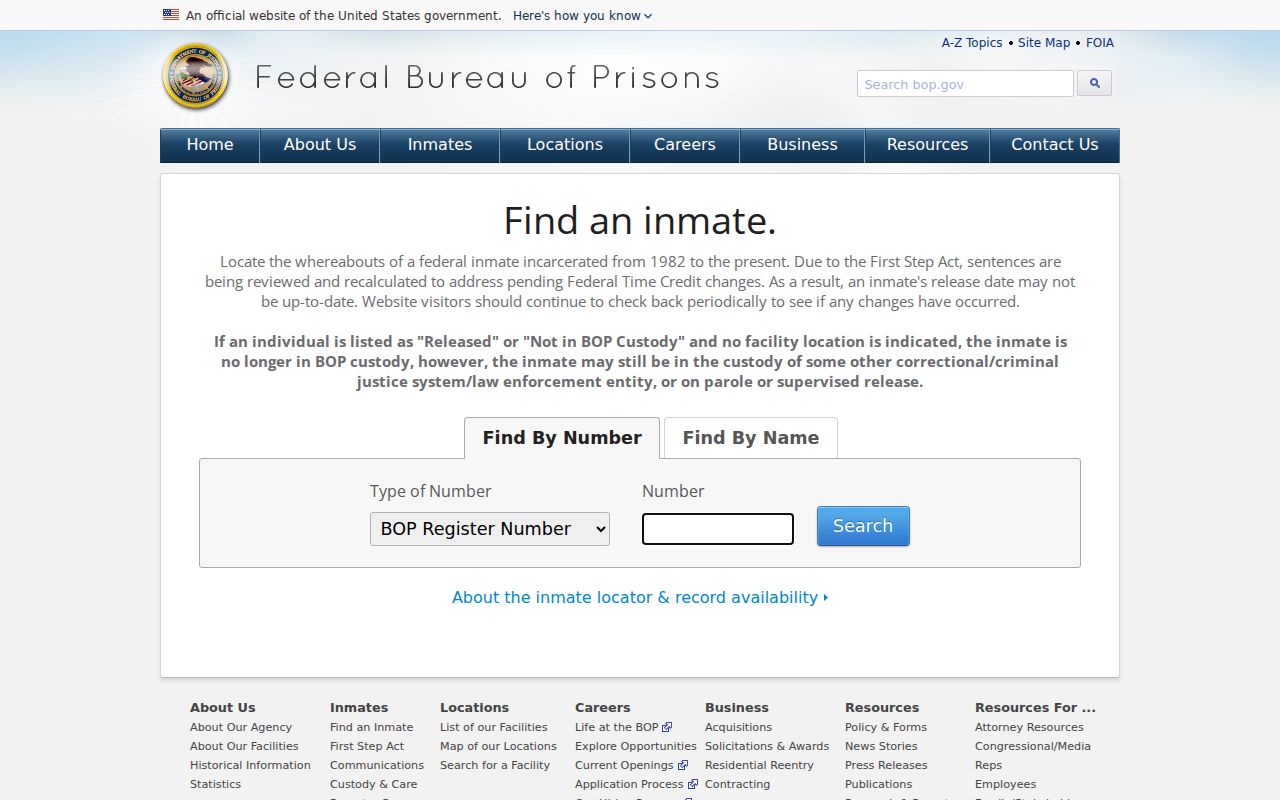
This screen applies only to federal custody. A missing result says nothing conclusive about a Charlotte County booking or Virginia sentence.
For a person's own national fingerprint record, the FBI Electronic Departmental Order portal is the official online starting point.
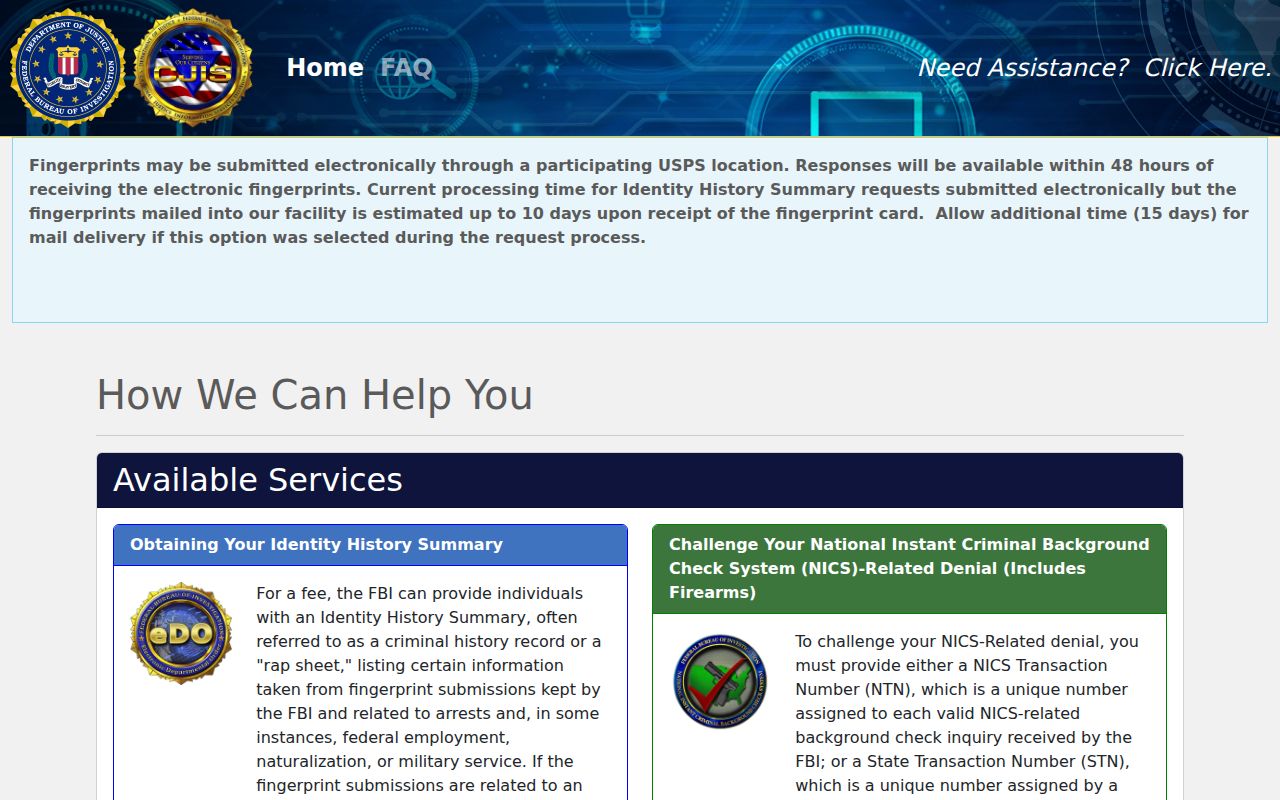
The FBI route is subject-only and fingerprint based. It is not a public name search and should be kept distinct from local booking research.
Sealing Charlotte County Arrest Records
A dismissal does not automatically erase the Charlotte County arrest report or booking event. Traditional Virginia expungement under § 19.2-392.2 chiefly addresses acquittals, nolle prosequi, other dismissed charges, and certain mistaken-identity cases. Virginia's wider automatic and petition sealing provisions took effect July 1, 2026. They cover specified records and eligible convictions under detailed limits.
For a record that should be sealed, contact the clerk where the case ended. If the CCRE entry remains wrong or incomplete, begin with the arresting source agency and then use VSP's review and challenge process. Sealing restricts ordinary access; it does not mean every record was destroyed. Eligibility, excluded offenses, waiting periods, restitution, and petition limits must be checked against the current statute and case facts.
Arrests vs Convictions
An arrest record documents an accusation, detention, or booking. A conviction record reflects a court judgment of guilt after a plea or trial. In Charlotte County, those records originate with different offices and can diverge as charges are amended, dismissed, certified to a grand jury, tried, or appealed.
| Point | Arrest Record | Conviction Record |
|---|---|---|
| Creator | Arresting agency and Charlotte Jail | General District or Circuit Court |
| Meaning | An arrest or booking occurred | The court entered a guilty judgment |
| Official source | Agency report and sheriff booking file | Clerk case file and reported CCRE disposition |
| Possible later event | Release, no filing, dismissal, or sealing | Sentence, appeal, correction, or eligible sealing |
Repository timing can also create a mismatch. The court may show a disposition before CCRE receives or joins it to the arrest cycle. When the two disagree, use the clerk for the authoritative local outcome and VSP's correction channel for the statewide record.
Note: A Charlotte County arrest is not proof of guilt, and a booking charge may differ from the final court disposition.