
Criminal Cases in the Charlotte County Courts
Charlotte County criminal court cases divide between two clerks at the same courthouse address. General District Court tries misdemeanors and traffic charges and conducts felony advisements and preliminary hearings. Circuit Court handles felony indictments, trials, sentencing, and appeals taken from district court. The towns of Keysville, Drakes Branch, and Phenix have no separate municipal courts, so town ordinance, traffic, and misdemeanor matters use this county court structure.
Both clerk counters are at 115 David Bruce Avenue in Charlotte Court House, but their mailing addresses and files remain separate. General District uses P.O. Box 127 and (434) 542-5600. Circuit uses P.O. Box 38 and (434) 542-5147. Both publish hours of 8:30 a.m. to 4:30 p.m. Ask the clerk that owns the case about inspection, copies, certification, mailing, and current charges.
The official Charlotte Circuit Court source shows the felony-level clerk and court schedule.
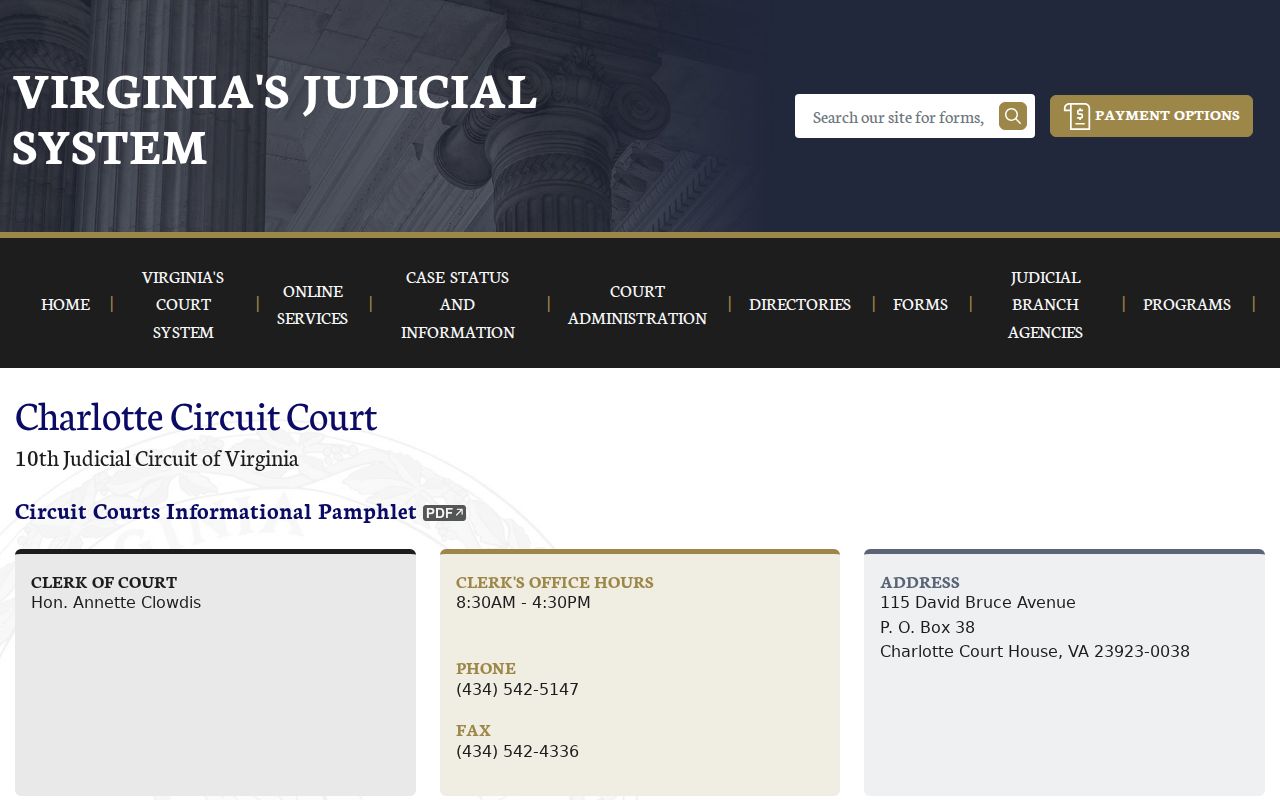
That clerk is the authoritative local source for a felony trial file or certified circuit disposition.
Search Two Charlotte County Courts
A felony can appear first in General District Court and later in Circuit Court under a new case number. The district entry records advisement, preliminary-hearing activity, and certification to the grand jury. A true bill then creates the Circuit Court indictment and trial file. Search both levels when the public record seems to stop after a felony preliminary event.
For misdemeanors, traffic prosecutions, and felony preliminary proceedings, the General District Court page identifies the proper clerk and published criminal docket.
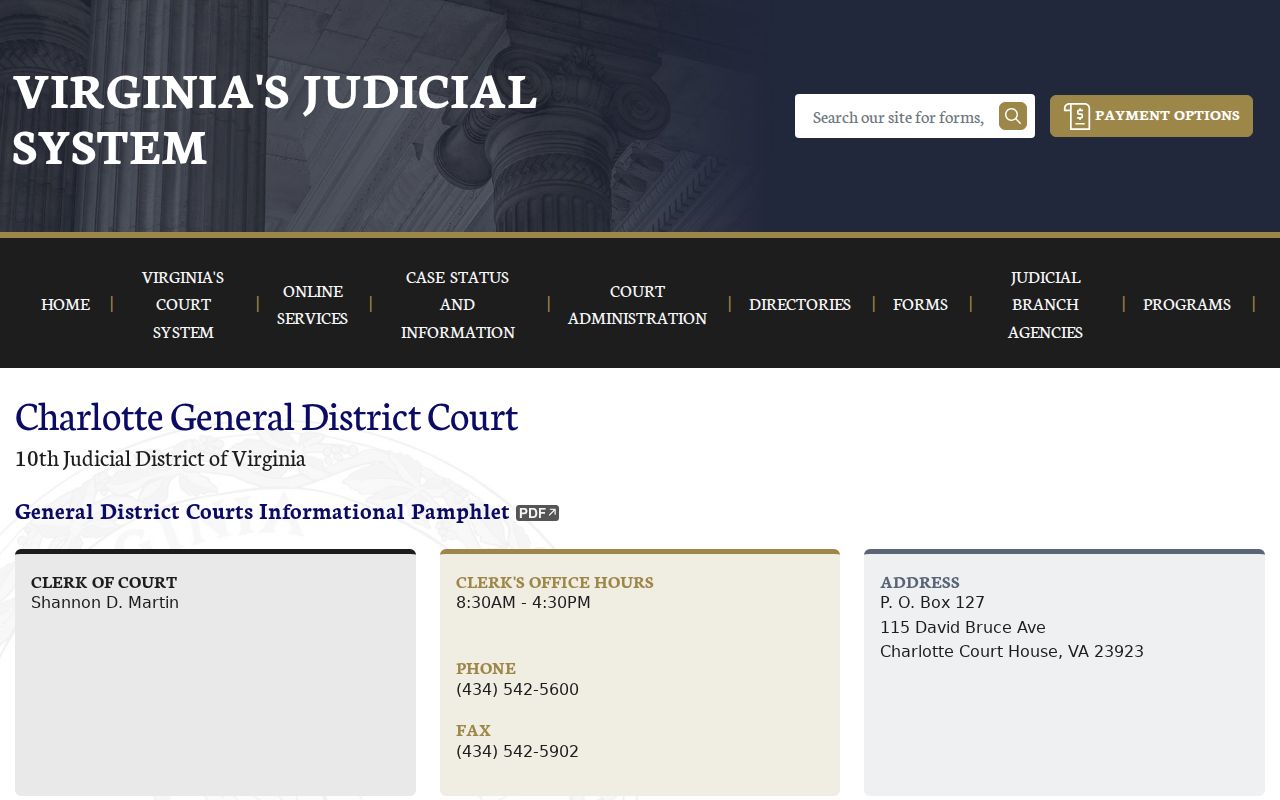
The page also gives local schedule context, but a hearing calendar is not a final disposition.
How to Search Case Records
Begin at Virginia Court Online Services and choose the Charlotte locality and court level. A defendant-name search helps when the case number is unknown. An exact case number gives the cleanest match. Hearing-date search is useful for a known docket day but can return scheduled matters that have no final outcome yet.
- Select Charlotte General District or Charlotte Circuit Court.
- Choose name, case number, or hearing date as the search type.
- Enter the available fields and check spelling or suffix variants.
- Open the detail and record the charge, events, status, and disposition.
- Call the responsible clerk for the full file or a certified copy.
A name-only match is not identity proof. Compare the court, date, charge, and other lawful details. If an early felony result says certified or continued to grand jury, repeat the search in Circuit Court. If the record should be sealed, ask the clerk rather than treating portal lag as proof of an access violation.
Charlotte County OCIS Search Fields
Virginia's public interface offers several routes to the same case index. The exact controls vary by selected system, but the official research captured these fields. Current, archived, or all-record filters may matter for older district cases. Criminal GC and traffic GT numbers also narrow a town or county search when the summons supplies one.
| Field | Type | Required | Use |
|---|---|---|---|
| Court or locality | Dropdown | Yes | Select Charlotte GDC or Circuit |
| Search type | Tabs or radio | Yes | Name, case number, or hearing date |
| Name | Text | Conditional | Defendant spelling and variants |
| Case number | Text | Conditional | Exact clerk identifier |
| Hearing date | Date | Conditional | Calendar search, not outcome-only |
| Case type | Filter | Optional | Criminal or traffic category |
The Virginia self-help case-search source explains system coverage and the exclusion of juvenile case information.
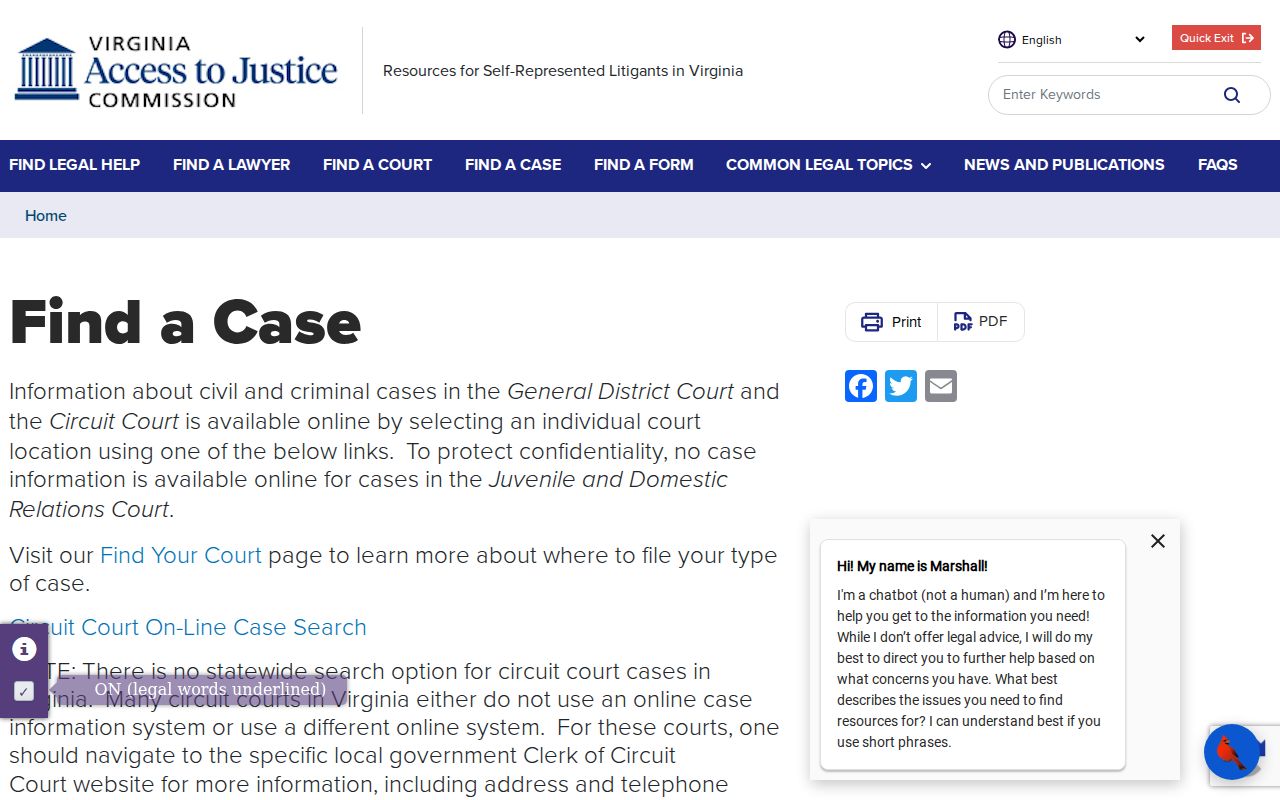
The coverage warning is a firm access boundary, not an invitation to seek juvenile details elsewhere.
What the Case File Shows
A public case detail is an index to judicial activity. It may show the court, case number, defendant display name, charge, Code section, offense or arrest date, hearing events, status, disposition, sentence, and public financial data. It does not mean every complaint, warrant, indictment, exhibit, or sentencing order can be downloaded. Ask the clerk for public documents that are not exposed online.
| Case number and court | The clerk-assigned identifier and court level. |
|---|---|
| Charging record | Offense description, Code section, date, and charge class when shown. |
| Docket events | Advisement, arraignment, continuance, plea, trial, and sentencing entries. |
| Hearing details | Date, time, type, and courtroom or judge when populated. |
| Disposition | Conviction, dismissal, nolle prosequi, acquittal, amendment, or certification. |
| Sentence and costs | Custody, suspended time, fine, restitution, conditions, and payment data where public. |
Read the final order with the docket. A dismissed result does not by itself erase the arrest report or booking entry. Sealing or expungement law controls later public access to those separate records.
Charlotte County Friday Criminal Docket
General District Court publishes a detailed Friday sequence. Advisements begin at 9:00 a.m., represented traffic matters at 9:15, traffic at 9:30, criminal cases at 10:30, and possession or VASAP violations at 11:00. A first criminal continuance needs the Commonwealth's Attorney's approval. Later continuances require court approval. These local rules explain why a docket can show several hearing dates before an outcome.
Circuit Court convenes at 9:30 a.m. Its terms begin six times each year, on the Wednesday after the first Monday in February, April, June, August, October, and December. Grand juries sit on the first day of term, and cases are set on Docket Day. This term cycle can create a gap between district certification and a circuit indictment.
Note: Call the clerk to confirm a hearing because published schedules and a specific case setting can change.
Stages of a Criminal Case
An officer may arrest under a warrant or lawful warrantless authority. Jail staff book and fingerprint the person. A magistrate addresses process and initial bail. General District Court handles early felony proceedings and decides misdemeanors. If a felony is certified and the grand jury returns a true bill, Circuit Court receives the indictment. Arraignment, motions, plea or trial, disposition, and sentencing follow there.
Case flow: Charges Filed › Arraignment › Pretrial › Plea or Trial › Disposition › Sentencing
An appeal from General District Court is heard anew in Circuit Court. Clerks then report qualifying dispositions to CCRE. A same-day online search can therefore miss a later court number or a disposition that has not yet reached the repository.
Charlotte Felony Entries Change Courts
A General District felony entry does not represent the felony trial. It may record advisement, bond events, continuances, preliminary hearing, waiver, or certification. Search Circuit Court after the grand-jury stage. Capture both case numbers because they describe different parts of the same prosecution path.
- Advisement
- An early appearance addressing the charge, rights, counsel, and scheduling.
- Certification
- Movement of a felony matter from district proceedings toward grand-jury review.
- True bill
- The grand jury found probable cause and returned an indictment.
- Nolle prosequi
- The prosecutor did not proceed at that time; it is not a conviction.
The Virginia Circuit Court jurisdiction source confirms the felony-level role and helps separate a preliminary district entry from the later circuit case file.
Access & Restrictions
Public access has limits. Virginia Judiciary does not expose juvenile case information online. Sealed and expunged matters, protected victim facts, personal identifiers, and confidential material may be absent or redacted. A clerk can explain whether a requested item is public, but cannot use another office's authority to release an investigative report or CCRE history.
Virginia Code § 17.1-208 governs clerk inspection and copies subject to confidentiality rules. The Virginia Freedom of Information Act governs many agency records, while § 19.2-389 separately limits CCRE dissemination. Do not apply the county's 25-cent VFOIA paper price to court copies. The research found no official current Charlotte clerk certification price, so ask before sending payment.
If a public case does not appear, check spelling, the other court, and archived filters. Then call the clerk. Absence from a public search can reflect court level, age, sealing, confidentiality, data timing, or a wrong name match.
Ask a precise question when calling. Give the court name, case number if known, defendant name, and the document sought. State whether a plain copy or certification is needed and ask about the current charge before sending funds. For a filing that belongs to the sheriff or prosecutor rather than the clerk's public case file, contact that originating office. The Commonwealth's Attorney at 111 LeGrande Avenue prosecutes the case, but the clerk remains custodian of the judicial docket and final order.
Federal Charlotte County Case Records
Charlotte County lies in the U.S. District Court for the Western District of Virginia. Federal dockets are separate from Circuit and General District Court. PACER requires an account and supplies docket sheets and filed documents subject to federal fees, sealing, and redaction. It does not replace a Charlotte clerk search.
The official PACER source shows the federal account and case-search service.
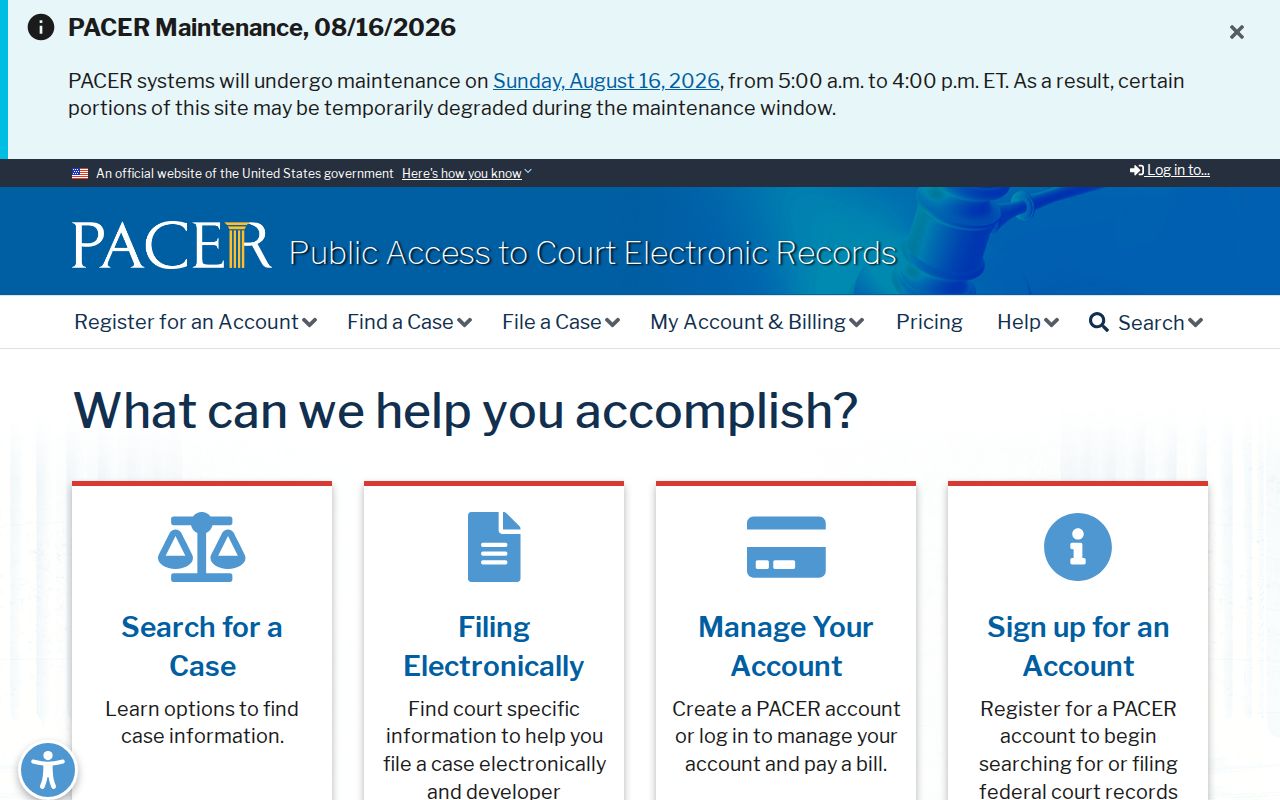
PACER is the docket channel, while the district court site supplies the court's local rules, notices, and office information.
The Western District of Virginia source is that official federal court gateway.
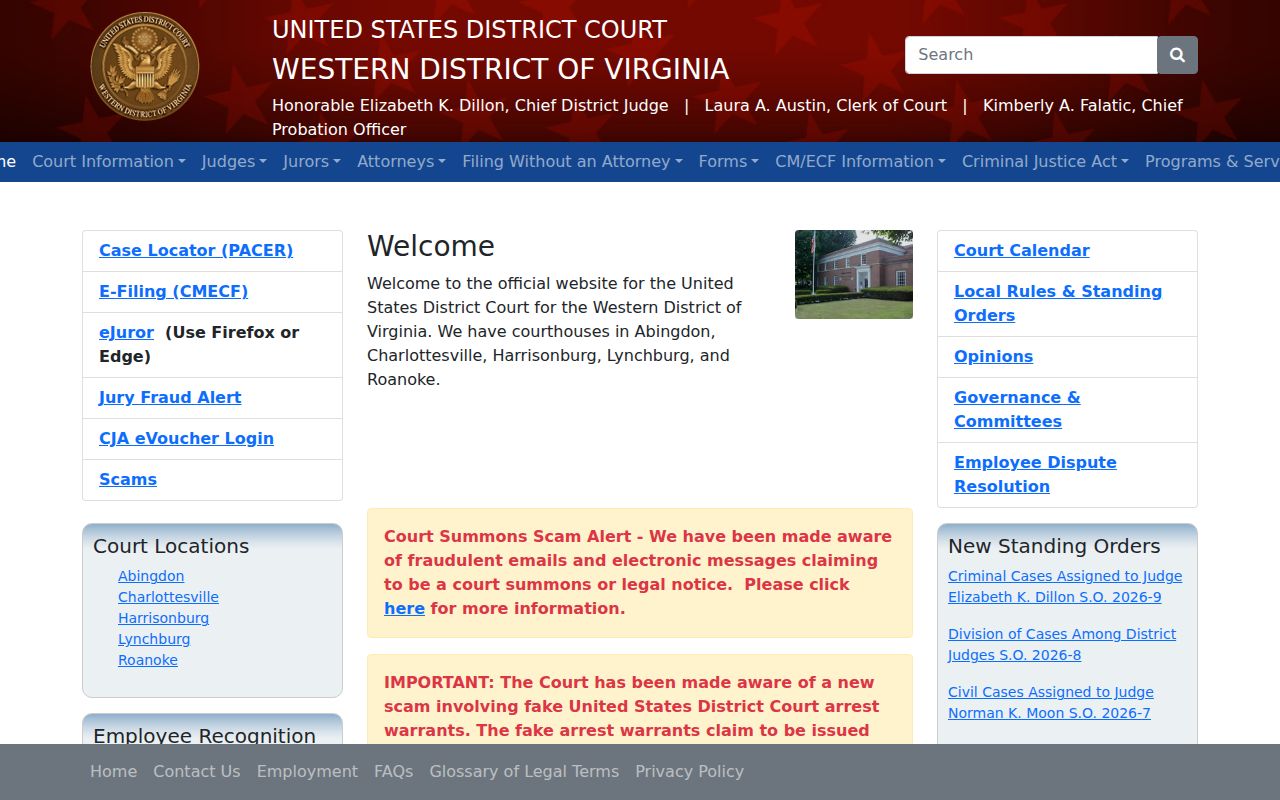
Use that layer only when the matter is federal. A Virginia charge, county booking, or state sentence remains in the local and state channels.