
How to Check Criminal History in Charlotte County
No single office holds a complete Charlotte County criminal history. Start with the record that answers the question at hand. Virginia Judiciary case information shows charges, events, status, and disposition. The correct clerk supplies the official file. Sheriff Records holds sheriff-created incident, arrest, booking, and custody material. Virginia State Police maintains the statewide Central Criminal Records Exchange, while the Virginia Department of Corrections covers state custody and supervision. Each source has a distinct job.
Gather the full name, prior names, an approximate event date, and a case or report number if known. A name match alone does not prove identity. Compare the court, date, charge, and other lawful details before relying on a result. For your own statewide record, use the identity-review route when accuracy matters.
- Search both Charlotte General District and Circuit Court when the case level is unclear.
- Call the proper clerk to confirm status and ask about copies or older files.
- Request the source report from the sheriff or other investigating agency.
- Use VADOC for state custody or supervision, not for a full local history.
- Use VSP CCRE or the FBI process for your own official repository record.
Charlotte County Record Fallbacks
Charlotte County has no county portal that joins court, arrest, jail, and warrant records. The practical chain is online case information, then the clerk, then the agency that made the record. Virginia Court Online Services is the remote starting point. The Circuit Court clerk handles felony trials and district appeals; the General District Court clerk handles misdemeanors, traffic cases, and felony preliminary proceedings.
The county government gateway helps route administrative requests, but it is not a criminal-history database. Sheriff Records at 222 Law Lane handles sheriff material by phone at (434) 542-5141. County Administration at 250 LeGrande Avenue can route a VFOIA request when the custodian is unclear. Ask for one defined record category and a bounded date range.
The county gateway appears in this official source capture.
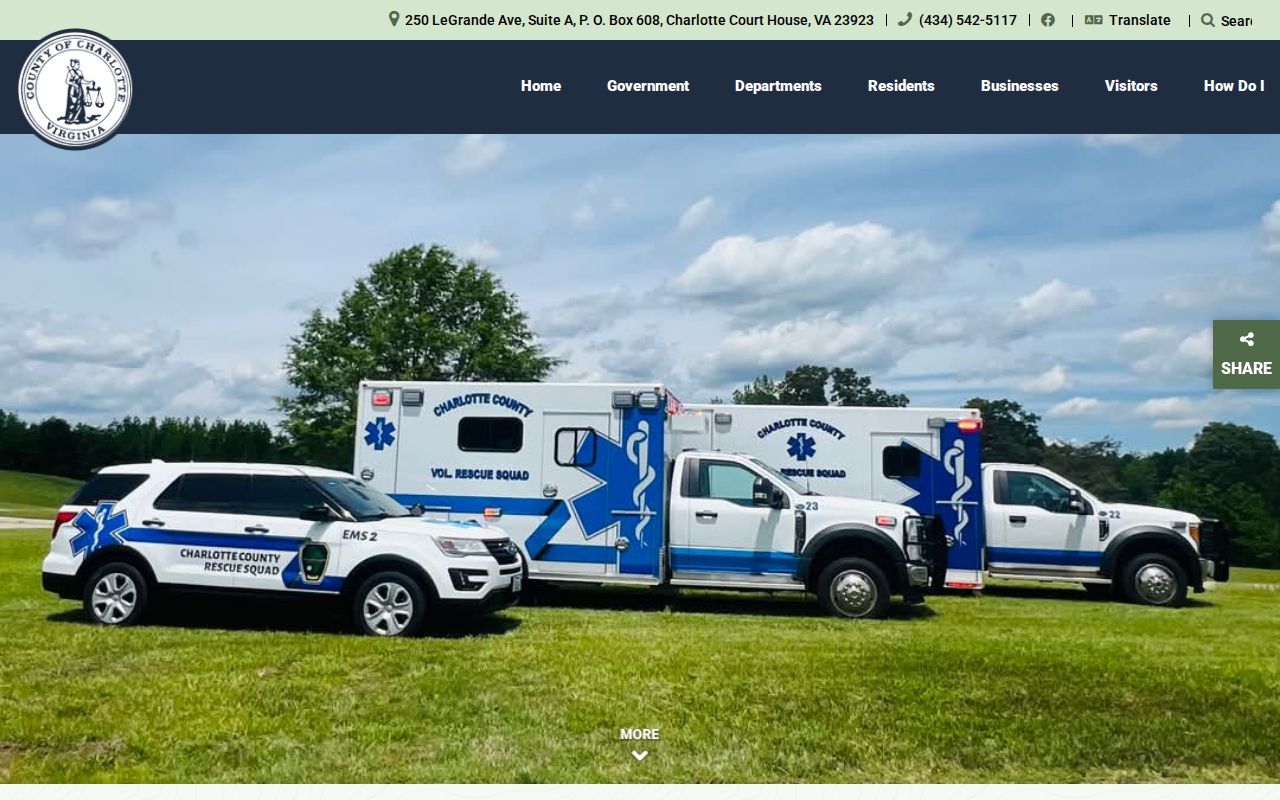
It routes readers to county offices, while court case data remains with Virginia Judiciary and the clerks.
Official Virginia Background Checks
The Virginia Department of State Police Criminal Justice Information Services Division operates CCRE. Its ordinary public route is a consent-based CATS Public SP-167 request, not an open instant name search. Enter subject and reply-to data, generate the form, obtain required signatures and notarization, and mail it with approved payment. If results go to someone other than the subject, VSP requires subject release and recipient signatures to be notarized.
A Virginia history search costs $15. A combined history and registry search costs $20; registry-only costs $15. VSP states about 15 business days, with FAQ guidance of 15 to 20. There is no expedited result. A name comparison is not the same as fingerprint-confirmed review. For your own national record, the FBI EDO portal requires fingerprints.
| SP-167 service | Published amount |
|---|---|
| Virginia criminal history | $15 |
| History plus registry | $20 |
| Registry only | $15 |
| Remote notarization | $15 additional |
Four Charlotte County Arrest Records
One Charlotte County arrest can create four records. The investigating agency writes the event narrative. Charlotte County Jail creates the booking file. Fingerprints and reportable arrest data move to CCRE. A magistrate and the courts create process, docket events, and a final disposition. These records can differ without any one being false.
| Record | Custodian | Best use |
|---|---|---|
| Incident or arrest report | Investigating agency | What the officer reported |
| Booking record | Charlotte County Sheriff | Local intake and custody |
| Court case | GDC or Circuit clerk | Charge, events, and outcome |
| CCRE history | Virginia State Police | Reportable statewide history |
A booking proves custody, not guilt. A court disposition is the best local source for outcome. Correction can require both the source agency and VSP review.
Types of Criminal Records
Charlotte County criminal records reflect different stages. An incident report describes an agency response. A booking file records intake. A warrant or capias is judicial process directing action. General District Court records misdemeanors, traffic cases, and early felony proceedings. Circuit Court records felony indictments, trials, sentencing, and district appeals. CCRE joins reportable fingerprints and dispositions at the state level.
Corrections and registry records serve narrower purposes. VADOC shows state custody or supervision, not a whole history. The Virginia Sex Offender and Crimes Against Minors Registry is a public-safety system with lawful-use limits. Juvenile information, investigative details, sealed files, and protected victim data may remain outside public view.
- Agency reports: event narratives held by the investigating office.
- Booking records: intake facts held at Law Lane.
- Court files: charge, event, judgment, and sentence records.
- Repository records: identity-linked reportable Virginia history.
- Custody and registry entries: purpose-specific state records.
Charlotte County Law Lane Records
All people arrested in Charlotte County are brought to the county jail at 222 Law Lane for processing. The sheriff reports an average jail population near 65. Intake establishes identity and charges, creates fingerprints and a photograph, screens medical and classification needs, and assigns a jail unit. No verified official online roster exists. For present local custody, call (434) 542-5141. For an older booking sheet or photograph, request the item from Sheriff Records.
A person transferred under a state sentence may appear in the VADOC Inmate and Supervisee Locator. The locator updates daily and carries a timing and accuracy warning. It does not replace the jail call or court judgment. NAAVI provides state notification after sentencing. A missing name in one system can reflect transfer, spelling, scope, or data lag rather than release.
The jail file and court file answer different questions. Sheriff intake records can show the holding charge, bond, booking time, and release facts. General District or Circuit Court shows which charge was prosecuted and how it ended. A request for the incident narrative must go to the investigating agency, which may be VSP or a conservation or ABC officer rather than the sheriff. Naming the exact record saves a broad search and helps the custodian apply the correct access rule.
Charlotte County Sheriff Records
222 Law Lane
Charlotte Court House, VA 23923
(434) 542-5141
Charlotte Circuit Court Clerk
115 David Bruce Avenue
P.O. Box 38
(434) 542-5147
Charlotte General District Clerk
115 David Bruce Avenue
P.O. Box 127
(434) 542-5600
What a Charlotte County Criminal Record Shows
The fields depend on the source. Court metadata may include the court, case number, defendant display name, offense and hearing dates, charge, Code section, status, disposition, and financial information. A clerk file may add pleadings, plea, sentence, costs, probation orders, and service entries. CCRE can contain an identity-linked arrest cycle, reporting agency, identifiers, charge, and reported disposition. Police narratives stay with the investigating agency.
| Name and identifiers | Display name and lawful matching details; scope varies by system. |
|---|---|
| Arrest and booking | Agency, date, intake facts, holding charge, bond, and release when entered. |
| Charge | Offense description, Code section, class, and later amendments. |
| Disposition | Conviction, acquittal, dismissal, nolle prosequi, or certification. |
| Sentence | Custody, suspended time, fine, costs, restitution, and conditions where public. |
| Supervision | VADOC custody or supervision status, not confidential case notes. |
Virginia Judiciary's online-service choices are shown in the official court source below.
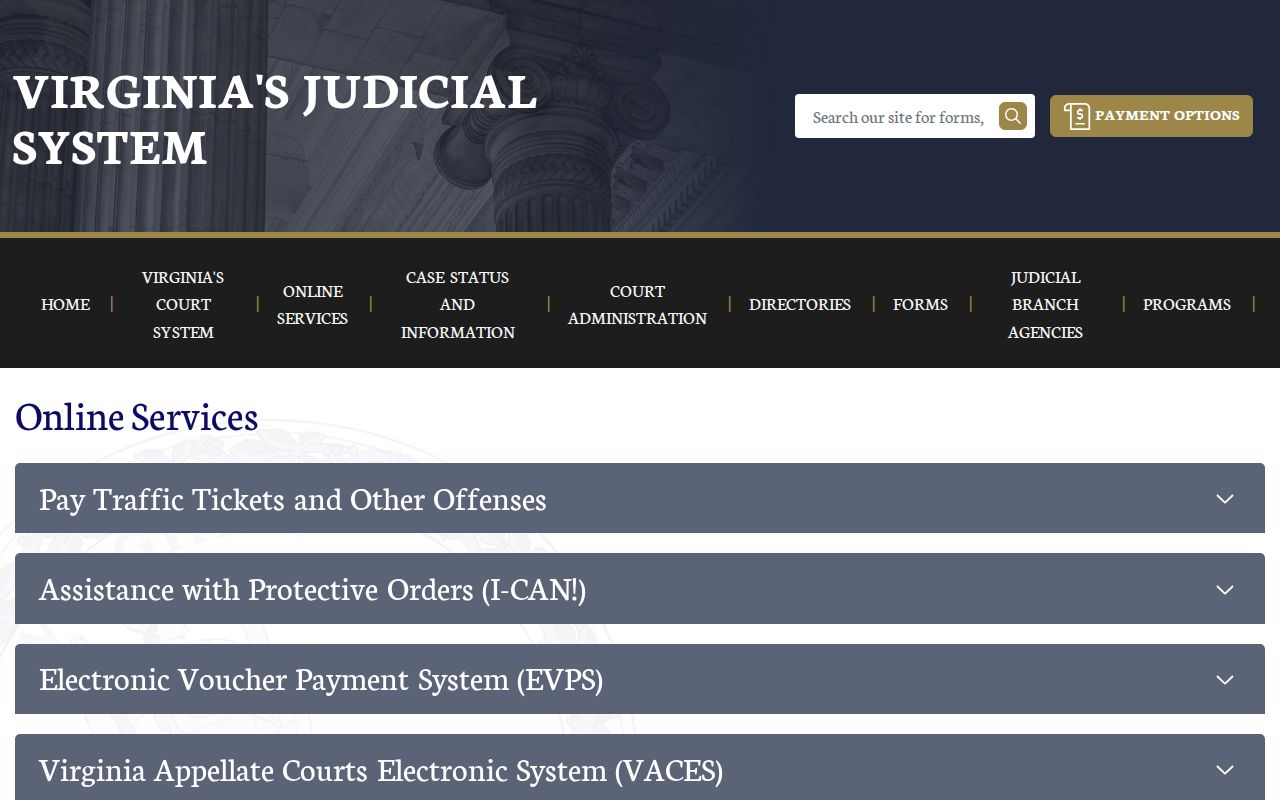
The screen helps choose a court system, but a clerk remains the source for a certified or fuller case file.
Charlotte County Docket Context
Charlotte General District Court recorded 2,169 filings from January through July 2024. Traffic made up 84.3 percent, criminal filings 6.1 percent, civil 9.4 percent, and commitments 0.2 percent. The underlying counts included 122 misdemeanors, 85 felony preliminary matters, 22 show causes, and 11 capias matters. Those figures describe filings, not unique people or convictions.
The Virginia court statistics service refreshes district data through daily and monthly products.
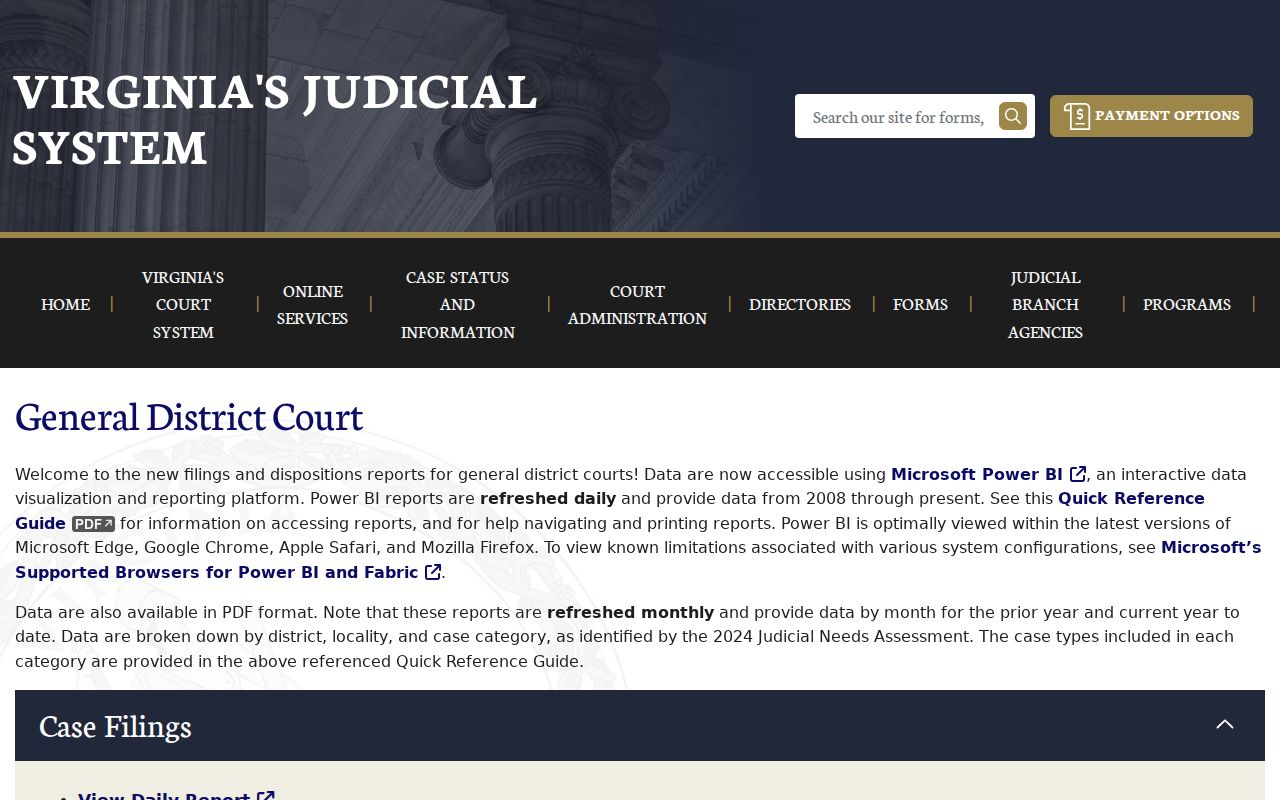
High traffic volume explains why a broad docket search can return many traffic matters before a user reaches a criminal case.
Public Access Laws
Virginia law opens some records while protecting others. The Virginia Freedom of Information Act applies to qualifying public records and includes exemptions. Basic criminal-incident facts may be released, while investigative files and protected details can be withheld. Court-clerk inspection and copy rules are separate from the county's VFOIA fee schedule. CCRE dissemination is also limited by its own statute.
Key Statutes:
Virginia FOIA sets the public-record framework and exemptions.
Va. Code § 2.2-3706.1 governs access to criminal-incident and investigative material.
Va. Code § 19.2-389 limits CCRE criminal-history dissemination.
Va. Code § 17.1-208 addresses clerk inspection and copies.
County policy lists paper at 25 cents per page, an estimated $5 USB at actual cost, and labor after 30 minutes billed in quarter-hour units. A deposit may be required when an estimate exceeds $200. These county terms do not set clerk, VSP, or federal fees.
Charlotte County Warrant Records
No official Charlotte County warrant list is online. That does not mean no warrant exists. Contact Sheriff Records and the likely issuing clerk, then review public OCIS case events. VCIN and NCIC are restricted law-enforcement systems. Unserved, sealed, juvenile, or investigation-sensitive process may not be public.
Distinguish an arrest warrant from a bench warrant or capias, a search warrant, fugitive process, and civil process. Provide the full name, date of birth when appropriate, likely court, and case number. For your own possible warrant, obtain current procedure from the clerk and arrange safe resolution and booking details with the sheriff. A search result is not legal confirmation of live status.
Note: The Law Lane lobby kiosk accepts cash and cards for bond, but the judicial order controls eligibility and amount.
Sealed, Expunged, and Restricted Records
Traditional Virginia expungement under § 19.2-392.2 mainly covers acquittals, nolle prosequi, dismissals, and some mistaken-identity cases. The petition goes to the circuit court where the matter ended. Fingerprints and a sealed CCRE response help the court match the correct record. An expungement order places covered material in a separate sealed file rather than leaving it in ordinary public access.
Virginia's broader automatic and petition sealing rules took effect July 1, 2026. They cover specified eligible records and convictions under detailed limits. Petition sealing can involve waiting periods, a lifetime grant cap, restitution, offense exclusions, and notice to the Commonwealth's Attorney. A sealed record is not destroyed and remains available for limited statutory uses. Juvenile information is separately restricted, and the Virginia Judiciary does not show juvenile cases in public online case information.
When Charlotte County Records Disagree
Check the clerk first when the dispute concerns case status or disposition. A court file may show that a charge was amended or dismissed even though an older booking record still shows the intake charge. If CCRE lacks that disposition or appears to match the wrong person, use VSP's record-review and challenge authority. VSP directs disputes about an arrest narrative to the arresting agency because it did not write that report.
- Nolle prosequi
- The prosecutor did not proceed with the charge at that time; it is not a conviction.
- Disposition
- The recorded case outcome, such as conviction, acquittal, dismissal, or nolle prosequi.
- Capias
- Court process directing custody, often tied to nonappearance or violation proceedings.
- Sealing
- A statutory limit on ordinary access that preserves defined authorized access.
The Library of Virginia records-officer directory identifies the county contacts who can help route local requests.
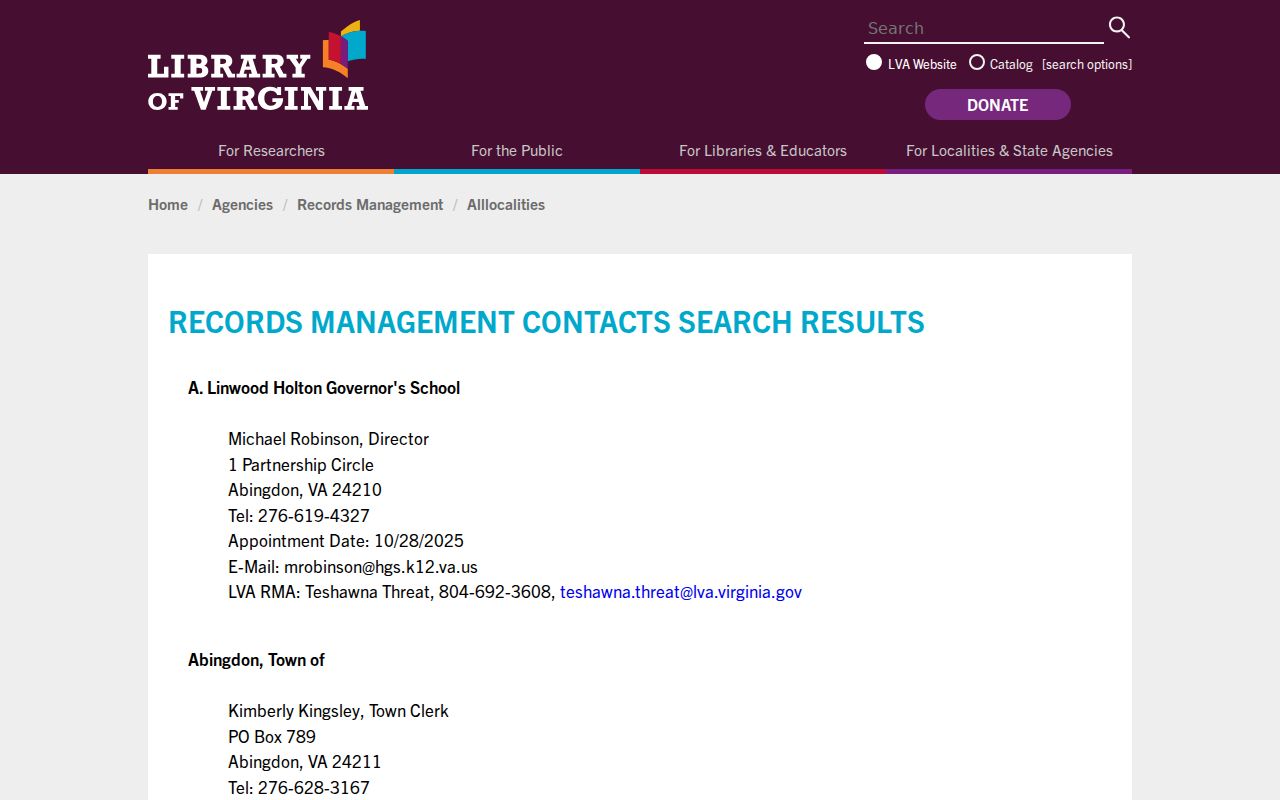
Routing a request to the correct custodian is essential because each office can correct only the record it owns or reports.
Criminal Records by City in Charlotte County
Charlotte County has no incorporated cities. Its three incorporated towns are Keysville, Drakes Branch, and Phenix. Charlotte Court House is the unincorporated county seat and has no separate city police department or municipal court. Only Drakes Branch has a verified town police agency. All three towns use Charlotte County courts and the county jail. The town guides keep town administrative records separate from sheriff, court, and state records.
Keysville Criminal History
Population 807 · Sheriff route; no verified town police or town court.
Drakes Branch Criminal History
Population 533 · Verified town police; county jail and courts.
Phenix Criminal History
Population 232 · Sheriff route plus historic Circuit Court order books.
Charlotte County Offline Record Access
Charlotte County covers 475.30 land square miles and had a 2025 population estimate of 11,401. Broadband subscription was 75.4 percent in the 2020 to 2024 Census profile. Phone, mail, and counter routes are therefore part of the main record system, not an afterthought. Confirm security, device, parking, accommodation, interpreter, and copy details before traveling because official court pages did not establish every building rule or price.
The two court clerks share a street address but not a mailing box. A mailed request must reach the clerk that owns the case. County Administration, Sheriff Records, VSP, VADOC, and the courts also apply different fee and release laws. Keep a copy of the request, note the date sent, and ask for an estimate when a sheriff or county request could involve video, audio, or extensive redaction. County VFOIA allows a five-business-day response path, including production, a cited withholding, a no-record response, or notice that seven more working days are needed.
The Charlotte Court House branch of DJJ Court Service Unit 10 serves juvenile intake and supervision, but juvenile confidentiality still controls access. The official CSU 10 source identifies the branch and contact channel.
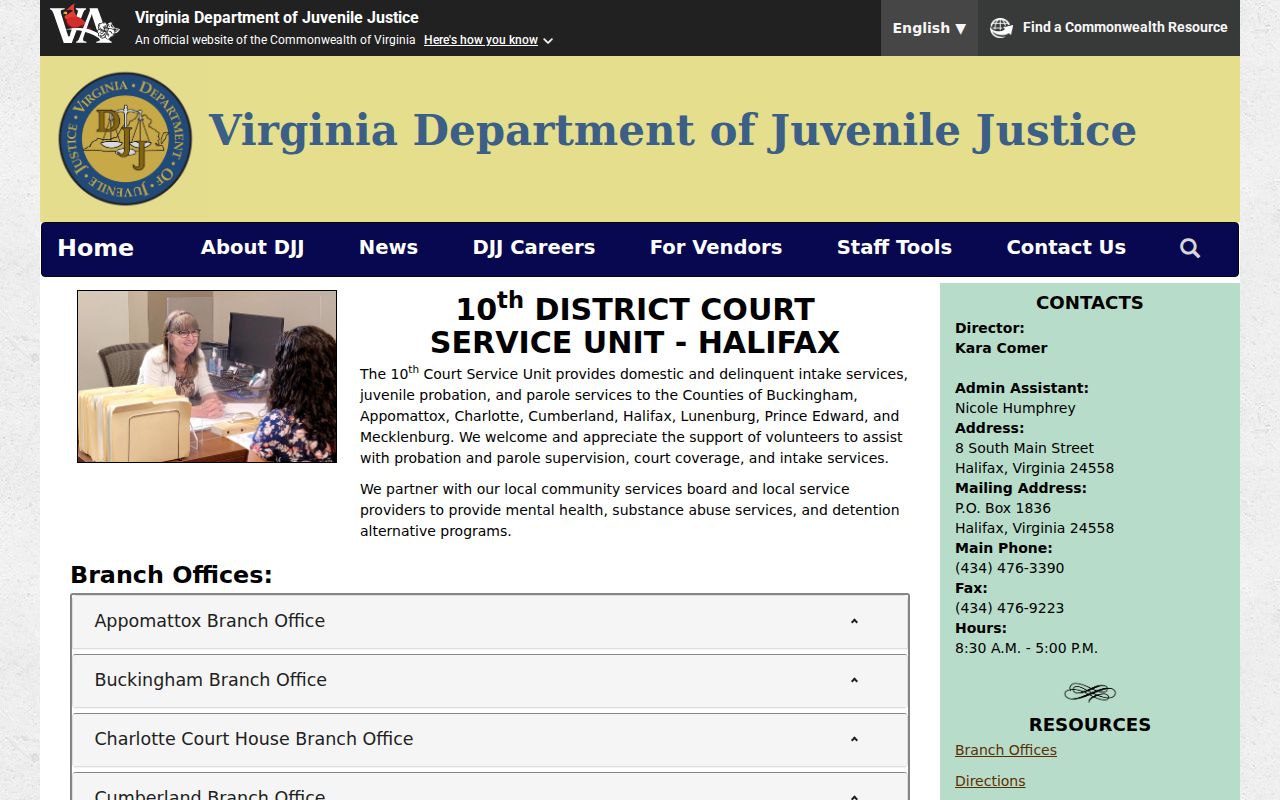
The office is a service contact, not a route around restrictions on juvenile court or supervision records.